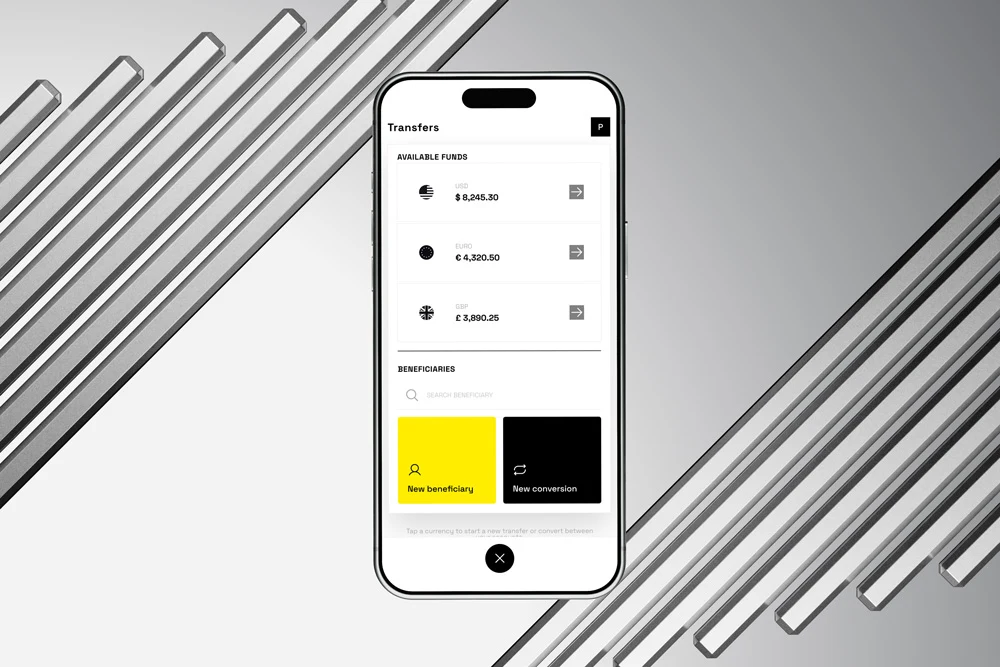
Fintech App Development Where Security, Compliance, and User Trust Align

In financial services, your interface is your security posture. Users who don't trust your app don't use it. Every decision: from data architecture to transfer confirmation screens: is made through the lens of trust. PCI DSS and SOC 2 compliance are built into the data model before the first screen is designed.

Book a Fintech Consultation

PCI DSS and SOC 2 architecture. Plaid, Stripe, and Open Banking API integrations. KYC/AML compliance built in.

What fintech products does Groooh build?

Groooh builds mobile banking apps, payment platforms, investment tools, lending platforms, financial operations dashboards, and crypto/DeFi interfaces. A fintech MVP typically runs $36,000 to $90,000 over 12 to 18 weeks. A fully compliant production app with PCI DSS and KYC/AML runs $120,000 to $180,000.


Fintech Products We Build

Product

Mobile Banking Apps

What It Includes

Consumer digital banking: account management, fund transfers, card controls, spending analytics, and alerts. 54% of mobile banking users open their app daily: the interface has to earn that habit.

Key Integrations

Plaid, Stripe, Open Banking APIs, biometric authentication

Product

Payment Platforms

What It Includes

Payment processing, multi-party payouts, merchant onboarding, invoicing, and compliance-grade reconciliation for marketplaces and B2B payment infrastructure.

Key Integrations

Stripe Connect, PayPal, Adyen, PCI DSS tokenization vaults

Product

Investment & Wealth Management

What It Includes

Portfolio dashboards, trade interfaces, robo-advisor flows, and performance analytics. Accuracy and clarity over visual complexity: this is not the domain for ambiguous data visualizations.

Key Integrations

Alpaca Markets, Plaid Investments, Polygon and Finnhub market data feeds

Product

Lending & Credit Platforms

What It Includes

Loan application flows designed to reduce abandonment, credit decisioning UX, repayment management, and bureau data integration without unnecessary data exposure.

Key Integrations

Experian, Equifax, TransUnion, custom credit scoring APIs

Product

Financial Operations Dashboards

What It Includes

Internal tooling for treasury, reporting, reconciliation, and compliance monitoring: for CFOs who need accurate real-time data without an analyst to interpret it.

Key Integrations

Custom financial APIs, PostgreSQL, Metabase, SOC 2-ready infrastructure

Product

Crypto & DeFi Interfaces

What It Includes

Web3 wallet integration, token management, DeFi protocol dashboards, and NFT marketplace infrastructure. Designed for both crypto-native users and newcomers.

Key Integrations

Metamask, WalletConnect, Ethers.js, The Graph Protocol

Why Daily Fintech Usage Raises the Cost of Bad Design

Over 54% of mobile banking users open their banking app at least once a day, and more than 90% open it several times a week (Insider Intelligence). Digital wallets show even stronger engagement: 72% of digital wallet users make payments through mobile apps daily or several times a week (PYMNTS). At that frequency of use, friction compounds fast. In financial services, friction doesn't just cause frustration: it reads as risk. A user who encounters an unclear confirmation screen on a transfer doesn't think 'confusing UX.' They think 'is this secure?' That's why our fintech design principles treat clarity and deliberate friction as trust mechanisms, not usability details.

Fintech Design Principles

Trust Signals Are Design Decisions

Security badges, encryption callouts, regulatory credentials, and compliance certification marks are not legal boilerplate placed in the footer. They're active trust signals that go where users are deciding whether to proceed.

Data Clarity Over Aesthetics

Financial data visualizations have to be accurate first and beautiful second. We never sacrifice clarity for aesthetics when real money is at stake. If a user misreads a number, the aesthetic doesn't matter.

Intentional Friction for Sensitive Actions

Transfers, withdrawals, and payments need confirmation states and deliberate friction: not as obstacles, but as safety nets. A clear 'Are you sure?' with a visible reversal path reduces fraud claims and builds user confidence simultaneously.

Mobile-First Consumer, Dashboard-First B2B

Consumer fintech is designed for a phone screen with one thumb. B2B financial tools are designed for a 27-inch monitor with a CFO who needs to see everything at once. We design for the actual device and context, not a generic responsive layout.

How an Accelerated, Compliance-Aware Fintech Build Runs

01Week 1 to 2

Regulatory Scoping & API Architecture

We map banking APIs (Plaid, Stripe, Open Banking), KYC/AML vendors, and PCI DSS boundaries into a concrete technical architecture before visual design.

02Week 2 to 4

High-Trust UX & Transaction Flows

Designing trust signals, verification states, and intentional friction for financial transfers. Clickable prototype validated with compliance and security standards.

03Week 4 to 9

Security-First Engineering Sprint

End-to-end encryption, biometric authentication, tokenized payment storage, double-entry ledger database, and real-time transaction pipelines built with AI velocity.

04Week 9 to 10

Penetration Testing, Audit Trail Verification & Launch

Third-party penetration testing coordination, automated vulnerability scanning, PCI DSS audit trail documentation, and high-availability cloud deployment.

Fintech Development Costs: Honest Numbers, AI-Era Value

Legacy financial software vendors charge excessive retainers. By leveraging modern financial SDKs, automated test harnesses, and AI-accelerated coding, we deliver 20% below standard agency benchmarks:

  • Fintech Core MVP (4 to 6 weeks): $22,000 to $44,000 (Plaid/Stripe Connect integration, biometric auth, secure ledger, basic wallet/dashboard)

  • Compliant Production Fintech App (6 to 10 weeks): $48,000 to $96,000 (KYC/AML verification, card issuance/ACH rails, PCI DSS tokenization, dispute handling)

  • Enterprise / Multi-Asset Platform (10 to 14 weeks): $95,000 to $155,000 (SOC 2 Type II readiness, real-time ledger accounting, multi-currency, Open Banking APIs)

  • PCI DSS Security & Architecture Readiness Package: $6,000 to $15,000 (architecture review, tokenization decoupling, audit-readiness documentation)

We quote fixed prices based on integration depth and regulatory scope. You retain 100% intellectual property and infrastructure ownership from day one.

Fintech Technical Stack

LayerDetails
Mobile
React Native for cross-platform consumer banking and wallet apps with biometric authentication (Face ID, fingerprint)
Web / B2B
Next.js full-stack with dashboard-first architecture optimized for complex financial data presentation
Payments & banking data
Plaid, Stripe, Stripe Connect, Adyen, Open Banking APIs: with PCI DSS tokenization vaults for card data
AI fraud & monitoring
LangChain and LangGraph-based real-time transaction monitoring and anomaly detection
Security
AES-256 encryption end-to-end, MFA and biometric auth, PCI DSS-compliant tokenization, SOC 2-aligned audit infrastructure

Fintech App Development: Compliance & Technical Questions

How much does fintech app development cost?

Our rates are approximately 20% lower than traditional financial software firms. A focused fintech MVP runs $22,000 to $44,000 (4 to 6 weeks). A production app with KYC/AML and PCI DSS compliance runs $48,000 to $96,000 (6 to 10 weeks). Enterprise platforms run $95,000 to $155,000. Scope is locked into a fixed-fee contract.

How long does it take to build a fintech MVP?

A focused fintech MVP takes 4 to 6 weeks. Full compliance builds (KYC/AML, tokenized payments, SOC 2 architecture) launch in 8 to 12 weeks. AI-assisted scaffolding allows us to compress routine development time without cutting security corners.

Do you build to PCI DSS and SOC 2 standards?

Yes. Compliance is designed into the data architecture from the first planning session. We don't treat it as a late-stage task.

Can you integrate with Plaid, Stripe, or banking APIs?

Yes. Plaid, Stripe, Stripe Connect, and Open Banking APIs are standard. Banking integrations take 40 to 60% longer to build and test than equivalent non-financial integrations: we scope that realistically.

How long does PCI DSS compliance add to a project?

PCI DSS compliance engineering adds 3 to 6 weeks, plus $5,000 to $50,000/year in ongoing audit costs. Building it in from the start costs a fraction of retrofitting it.

Do you build crypto or DeFi interfaces?

Yes. Web3 wallet integration, token management, and DeFi protocol dashboards using Metamask, WalletConnect, and Ethers.js. DeFi products require a separate regulatory compliance analysis.

Can you build lending or credit decisioning products?

Yes. Loan application flows, credit decisioning UX, and repayment management with Experian, Equifax, TransUnion, or custom scoring API integration.

What AI features do you build into fintech products?

Fraud detection and transaction monitoring using LangChain and LangGraph-based systems that analyze transaction patterns in real time. Also AI-powered financial advisory features and anomaly detection for operations dashboards.

Do you work with early-stage fintech startups or only established institutions?

Both. We scope MVPs appropriately for validation stages and production builds for established institutions modernizing legacy systems.

Do you handle SOC 2 certification, or just the architecture?

We architect systems to be SOC 2-ready. Full SOC 2 Type II certification is a separate audit process ($50,000 to $150,000, 6 to 12 months) that we prepare you for but don't certify directly.