

Shopee Multi-Vendor Marketplace Case Study
Multi-Vendor Marketplace for Independent Sellers

What is Shopee?
Shopee is a multi-vendor marketplace platform where independent sellers can set up their own shop, list their products, and sell to customers, all under one roof. Think of it as a shopping mall built inside an app. Customers browse across dozens of vendors in one place. Sellers get a ready-made storefront without needing to build anything themselves. Everyone wins. We built the full platform for this client, covering the customer-facing shopping app, the vendor portal for sellers, and the admin dashboard that ties it all together.

The Problem
Independent sellers have always had it hard online. Building your own store takes time and money. Selling on large platforms means disappearing into a sea of competitors and giving away a significant cut of revenue. There was a clear gap for a platform that gave sellers a meaningful presence and gave customers a curated, trustworthy place to shop. From the customer side, the problem was fragmentation. Buying from independent sellers usually meant visiting multiple websites with inconsistent experiences, different checkout flows, and no unified way to track orders. It felt risky and inconvenient. The client wanted a platform that solved both sides of that equation at once.
What We Built
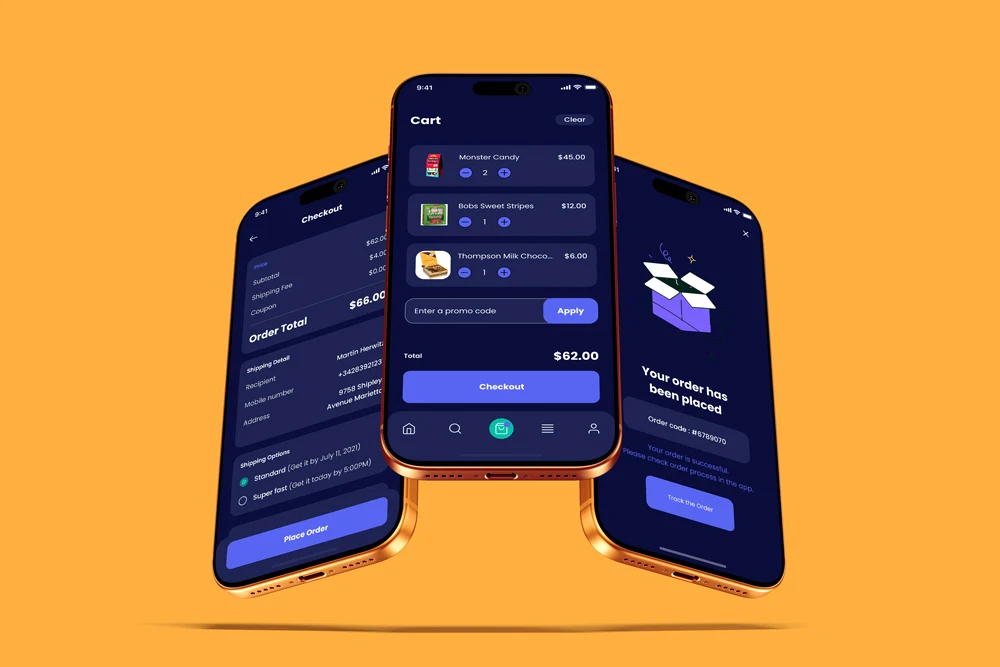
The customer app is a full shopping experience. A home feed shows featured products, trending items, and vendor spotlights. Category browsing and search with filters make discovery easy. Product pages show photos, descriptions, pricing, seller information, and reviews. Customers can add items from multiple vendors into a single cart and check out in one transaction. Order tracking, wishlist, and a review system round out the experience. The vendor portal is a separate interface built specifically for sellers. Onboarding walks a new vendor through setting up their shop profile, adding their first products, and connecting their payment details. From there, they manage their product catalog with categories, variants, and stock levels. Incoming orders appear in a dedicated order management screen with status tracking. Sales analytics show revenue, top products, and order volume over time. The admin dashboard gives the platform owner full visibility and control. Vendor approval, product moderation, commission settings, dispute resolution, and platform-wide analytics all live here.
The Design Approach
The customer-facing app needed to feel like a premium shopping experience, not a bargain marketplace. The visual design was built around product photography, giving listings room to breathe and making browsing feel enjoyable rather than overwhelming. The vendor portal was designed with a completely different user in mind: someone who is probably not particularly technical, is running their business alone or with a small team, and needs to get things done quickly. We prioritized clarity over features, making the most common actions (add a product, process an order, check revenue) reachable in as few taps as possible. The admin panel followed a data-first design approach because the people using it are making decisions based on numbers. Clean tables, clear filters, and well-structured analytics were the priority.
The Technical Side
Multi-vendor platforms have a lot of moving parts under the hood. The architecture had to support vendor-level product and order management while keeping the customer experience unified. Commission calculation, split payouts, and vendor-specific inventory all required careful data modeling from the start. The product catalog was built to handle variable pricing, multiple images, product variants (size, color, type), and stock tracking per variant. The cart and checkout flow handles items from multiple vendors transparently, showing the customer a single total while routing orders to the correct sellers behind the scenes. Search and filtering were built with performance in mind because a slow browse experience kills conversion. Category trees, tag-based filtering, and price range filtering all work in combination without noticeable lag.
What Made This One Different
Multi-vendor platforms are deceptively complex. On the surface it looks like an eCommerce app. Underneath it is three different products (customer app, vendor portal, admin panel) that all have to work perfectly together. The challenge was keeping the customer experience simple while giving vendors and admins the depth they actually need. We solved that by designing each surface independently, for its own user, then building the backend to connect them seamlessly.
What We Delivered
| Deliverable | Detail |
|---|---|
UI/UX Design | Full design system for customer app, vendor portal, and admin dashboard |
Customer App | Browse, search, filter, cart, checkout, order tracking, reviews |
Vendor Portal | Shop setup, product management, order management, analytics |
Admin Dashboard | Vendor approval, moderation, commission control, platform analytics |
Multi-vendor Cart | Unified checkout across multiple vendor orders |
Payments | Split payouts, commission deduction, vendor settlement |
Catalog | Variants, categories, stock tracking, image management |
Reviews | Product and vendor reviews with moderation |
Want Us to Work on Your Store App?
Let's Start
Let's Start

